
Dental Implants in Plainville, MA
A fixed, long-term way to replace one tooth, several teeth or a full arch, planned and restored by a dentist with a special interest in prosthodontics.
A dental implant replaces the root of a missing tooth, so the new tooth is anchored in the jaw rather than resting on the gums. For many patients it is the closest thing to having their own tooth back.
SpecialFREE Implant Consultation & 3D Cone Beam Scan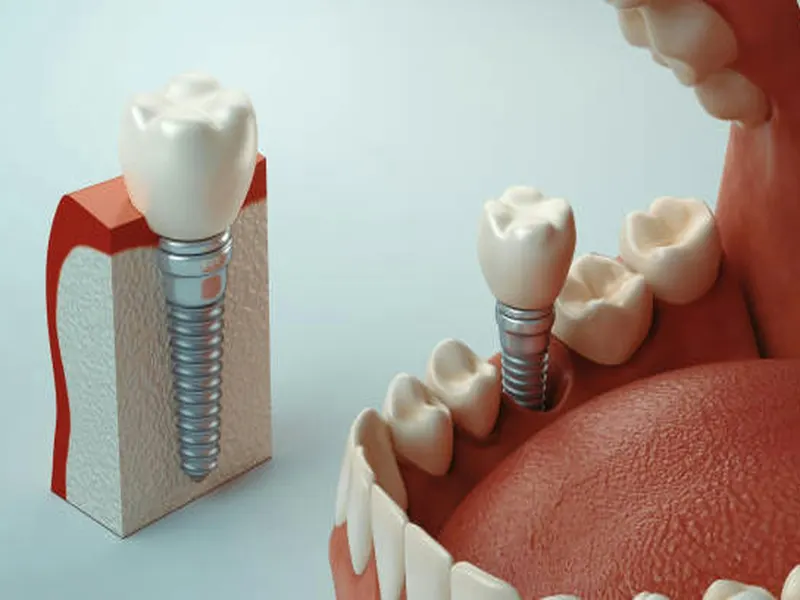
What’s included
- Replacement for one tooth, several teeth or a full arch
- Cone Beam 3D imaging used to assess bone and plan placement
- Crowns, bridges or dentures attached to the implants
- Restorations planned by a dentist with a prosthodontic focus
- Follow-up checks of the gums, bone and implant parts
About Dental Implants
When you have missing teeth, an alternative solution to dentures is dental implants. While dentures are removable, dental implants provide permanent new teeth to restore your mouth's function and appearance. Dental implants tend to offer a successful and lasting solution to the loss of some or all of your teeth.
Why Replacing a Missing Tooth Matters
A gap is more than a cosmetic problem. Neighboring teeth can drift or tip into the space, the opposing tooth can over-erupt, and your bite can slowly shift. Chewing often moves to the other side of the mouth, which puts extra load on teeth that were never meant to do all the work. The jawbone also changes. Bone that no longer supports a tooth root tends to shrink over time. An implant sits in the bone the way a natural root does, which can help preserve the bone around it, something a conventional bridge or denture does not do. Because an implant stands on its own, it usually does not require reshaping healthy neighboring teeth, as a traditional bridge does.
What to Expect
Treatment starts with a consultation. Dr. Naiman examines your mouth, reviews your health history and uses Cone Beam 3D imaging to look at the bone where the implant would go. Not everyone is a candidate right away; some patients may need gum treatment or bone grafting first, and we will tell you plainly if that is the case. Once the implant is placed, it typically needs a few months to bond with the bone. During that time a temporary option may be used so you are not left with a gap. After healing, the final crown, bridge or denture is made and attached. Dr. Naiman has been with Advanced Dental Care since 1995 and has a special interest in prosthodontics, the branch of dentistry focused on replacing and restoring teeth. That focus shapes how each implant restoration is planned, from the shape of the tooth to how it meets your bite.
Common Questions
Am I a candidate for dental implants?
Does getting an implant hurt?
How long do dental implants last?
How long does the whole process take?
What is the difference between an implant and a bridge?
Terms You May Hear
- Dental Implant
- A small post, usually titanium, placed in the jawbone to act as the root of a replacement tooth.
- Abutment
- The connector piece that attaches to the implant and holds the crown, bridge or denture in place.
- Osseointegration
- The process by which bone grows around and bonds to an implant during healing.
Related Services
Ready to Schedule Your Appointment?
Missing a tooth, or tired of a loose denture? Call (508) 695-7674 to ask about an implant consultation with Dr. Naiman.