
Root Canals in Plainville, MA
Treatment that removes infected or inflamed tissue from inside a tooth, relieving pain and often saving the tooth.
A root canal has a reputation it does not deserve. The treatment itself is designed to relieve the pain of an infected tooth, and with modern anesthesia it is often similar to having a filling.
What’s included
- Relief from pain caused by infection inside the tooth
- Removal of infected pulp and cleaning of the canals
- Local anesthesia for a comfortable procedure
- Often saves a tooth that would otherwise need extraction
- Crown recommended when needed to protect the treated tooth
About Root Canals
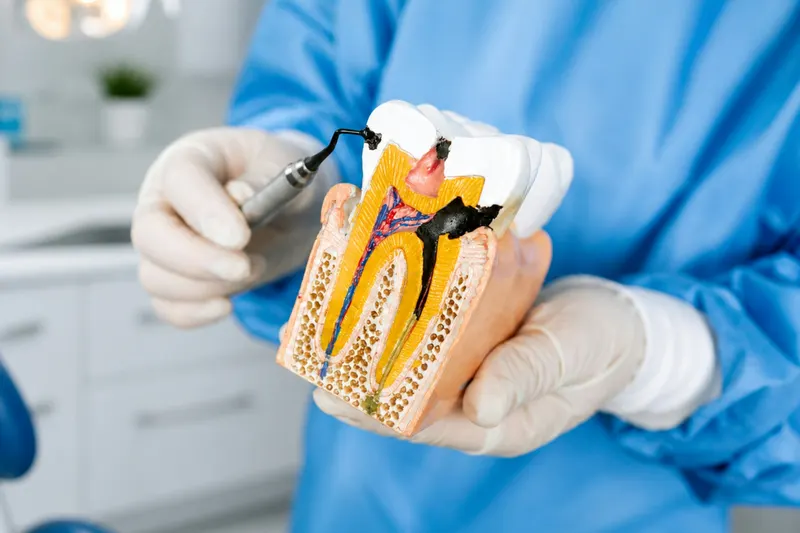
Root canals are needed when decay and bacteria spread for too long without treatment. At a certain point, this decay makes it to the pulp inside the tooth. This pulp includes nerves, therefore infection generally causes a lot of pain. Since this is happening on the inside of the tooth, you won't necessarily see the damage. Instead, you could feel it through pain and notice other signs that include bleeding, swelling and bad breath.
Why Save the Tooth
Once the pulp inside a tooth is infected, it does not heal on its own. Without treatment the infection can spread to the bone around the root and form an abscess. The alternative to a root canal is usually extraction. Keeping your natural tooth helps maintain your bite, keeps neighboring teeth from shifting and avoids the need for an implant or bridge. A tooth that has had a root canal can function well for many years, especially when it is protected with a crown.
What to Expect
The tooth is numbed thoroughly. A small opening is made to reach the pulp, the infected tissue is removed, and the canals are cleaned, shaped and sealed. Digital X-rays help guide the treatment. Depending on the tooth and the infection, treatment may take one or two visits. A temporary filling protects the tooth in between. Back teeth, and teeth that are already heavily filled, are often recommended for a crown afterward because a treated tooth can become more brittle. With his special interest in prosthodontics, Dr. Naiman plans that final restoration as part of the treatment.
Common Questions
Does a root canal hurt?
How do I know if I need a root canal?
Will I need a crown after a root canal?
How long does a root canal take?
Is extraction a better option?
Terms You May Hear
- Pulp
- The soft tissue inside a tooth that contains nerves and blood vessels.
- Root Canal
- Both the channel inside a tooth root that holds the pulp, and the procedure to clean and seal it.
- Gutta-Percha
- A rubber-like material used to fill and seal the canals after they are cleaned.
Related Services
Ready to Schedule Your Appointment?
Dealing with a toothache that will not go away? Call (508) 695-7674 to have it evaluated.