
Oral Cancer Screenings in Plainville, MA
A quick, painless check of the mouth, tongue, throat and neck for early signs of oral cancer.
Oral cancer is often more treatable when it is found early, and early changes are not always noticeable to the person who has them. A screening during your regular exam takes only a few minutes.
What’s included
- Visual exam of lips, cheeks, tongue, gums and throat
- Gentle check of the jaw and neck for lumps
- Fast, painless and done during routine checkups
- Changes noted and monitored over time
- Referral for further evaluation when something needs a closer look
About Oral Cancer Screenings
Nobody wants to hear that they may have oral cancer. Although it can be fatal, it is easier to treat the earlier it is caught. For this reason, we are proud to assist our patients with an oral cancer screening. We want to help our patients survive this often fatal disease. Oral cancer will typically show up as white or red patches or lesions inside of your mouth. You may even notice the lesions on your tongue or on the floor of your mouth. Many people experience a hard time swallowing, bleeding in the mouth, or even swelling in your face or neck.
Why Screening Matters
Early oral cancers can look like ordinary sores, patches or irritation, and they are often painless at first. Because they do not necessarily hurt, people may not seek care until the disease is more advanced. A dentist looks at the inside of your mouth more closely and more often than almost anyone else, which makes routine dental visits a practical place to catch changes early. Risk factors include tobacco use, heavy alcohol use, HPV infection and sun exposure to the lips, but oral cancer can also occur in people with no known risk factors. That is why screening is part of routine care for adults.
What to Expect
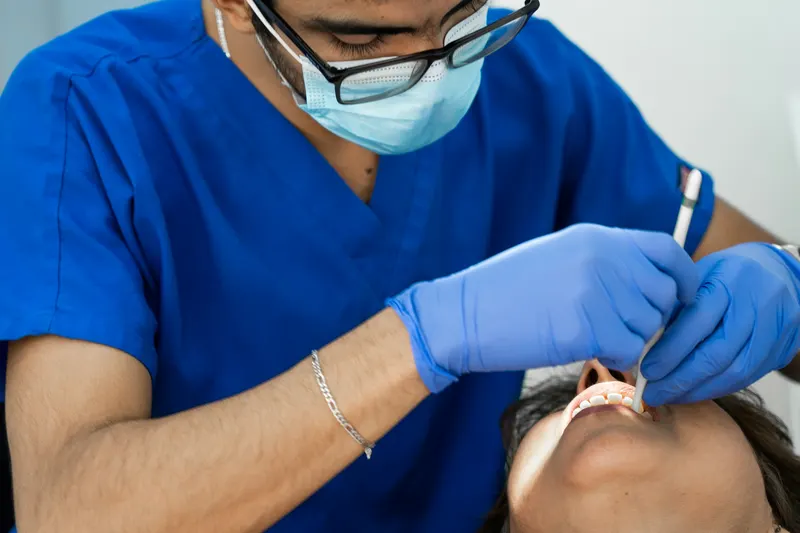
The screening is part of your regular exam. Dr. Naiman looks at your lips, cheeks, gums, tongue, the floor and roof of your mouth and the back of your throat, and gently feels the jaw and neck for lumps or swelling. Most findings turn out to be harmless, such as irritation from a sharp tooth or a minor injury. If we see something unusual, we may recheck it in a couple of weeks, and if it persists, recommend further evaluation or a biopsy by a specialist. Between visits, call us if you notice a sore that does not heal within about two weeks, a lump, a white or red patch, or ongoing trouble swallowing.
Common Questions
How often should I be screened?
Does an oral cancer screening hurt?
What are early warning signs of oral cancer?
If you find something, does it mean I have cancer?
Who is at risk for oral cancer?
Terms You May Hear
- Lesion
- Any area of abnormal tissue, such as a sore, patch or lump.
- Leukoplakia
- A white patch in the mouth that cannot be wiped off and should be evaluated.
- Biopsy
- Removal of a small tissue sample for laboratory testing to determine whether cells are abnormal.
Related Services
Ready to Schedule Your Appointment?
Noticed a sore or patch that is not healing? Call (508) 695-7674 to have it looked at.